
The textile and fashion industry urgently needs a change of course: increasing regulatory requirements, dwindling resources, and pressure to drastically reduce CO₂ emissions make it clear that the future of the industry is circular. But true circularity does not come at the end of a product's life—it begins at the beginning. At the design stage. One approach that could get the industry back on track is Design for Disassembly (DfD).
Assembly, disassembly – what’s that? This term, which is currently on everyone’s lips – not just in the textile industry – refers to a design approach that ensures products can be easily, efficiently, and non-destructively taken apart at the end of their life cycle (EoL). Materials are separated by type, allowing them to be reused or recycled and returned to their respective cycles.
DfD involves much more than just the choice of materials. Other decisive factors include combinations of materials, joining techniques such as seams, adhesives and finishes, as well as labelling, traceability and related documentation, such as a digital product passport. These factors determine whether a garment – or any product from any other industry – can be recycled at the end of its life or becomes waste.
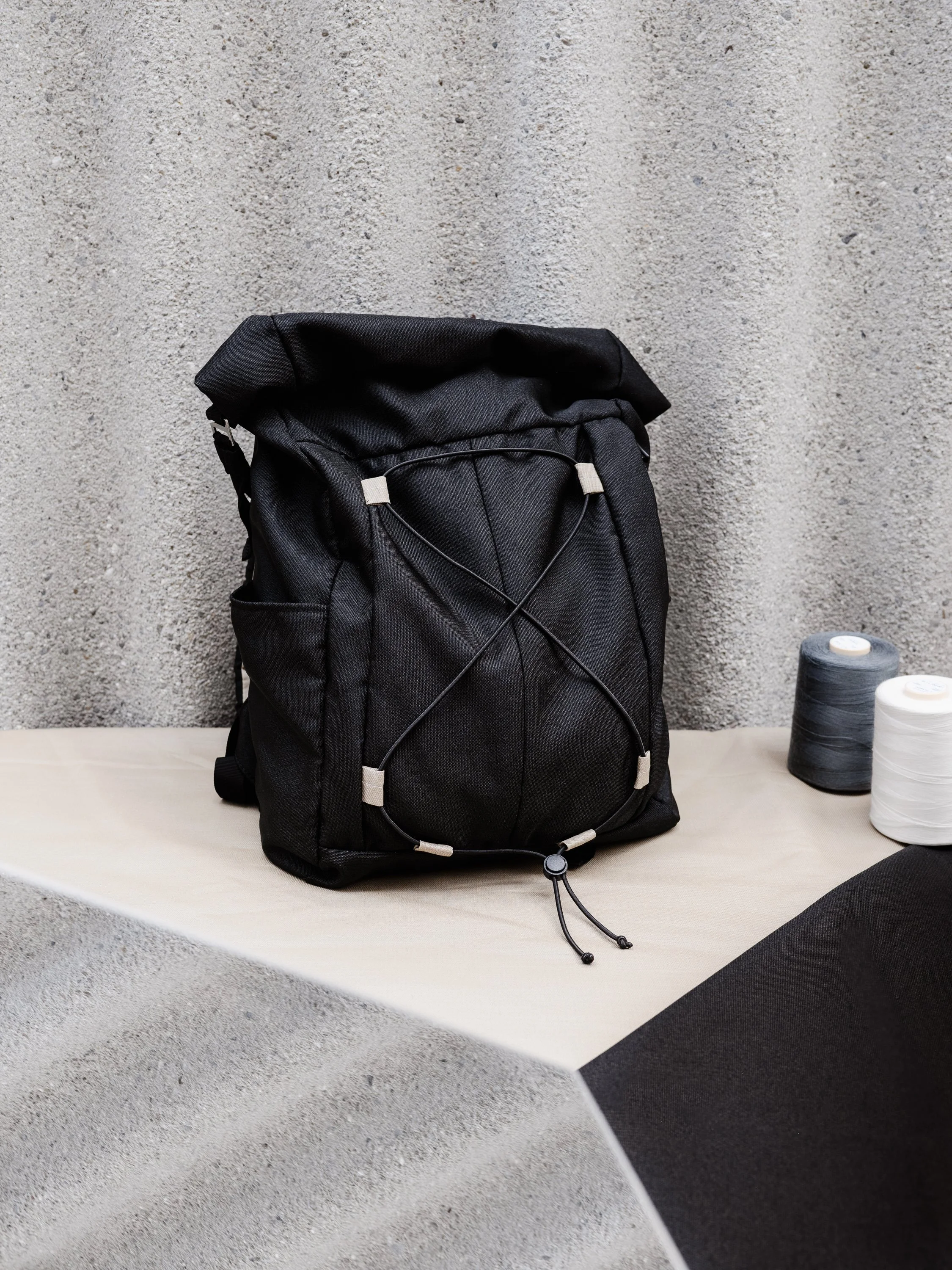
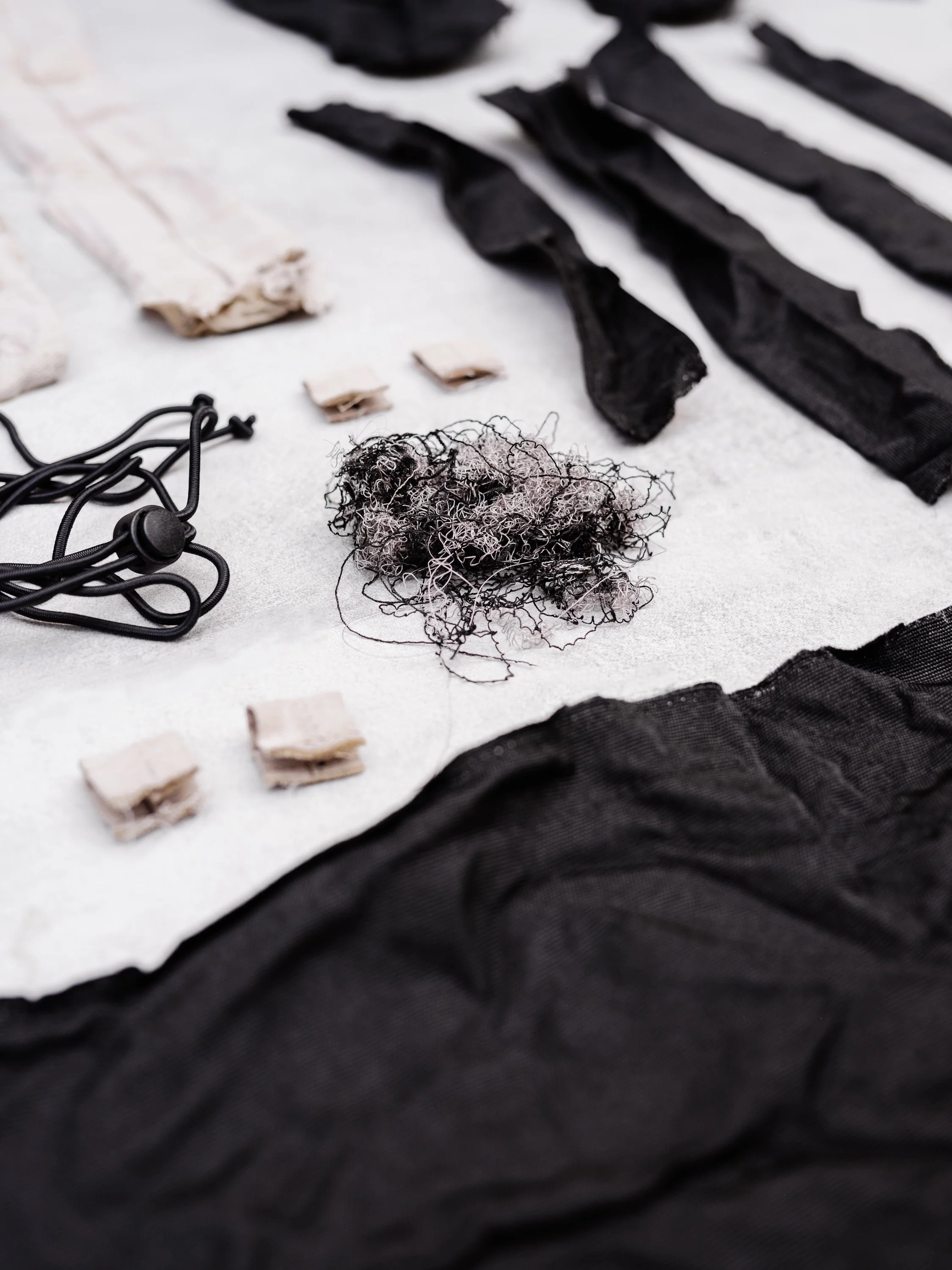
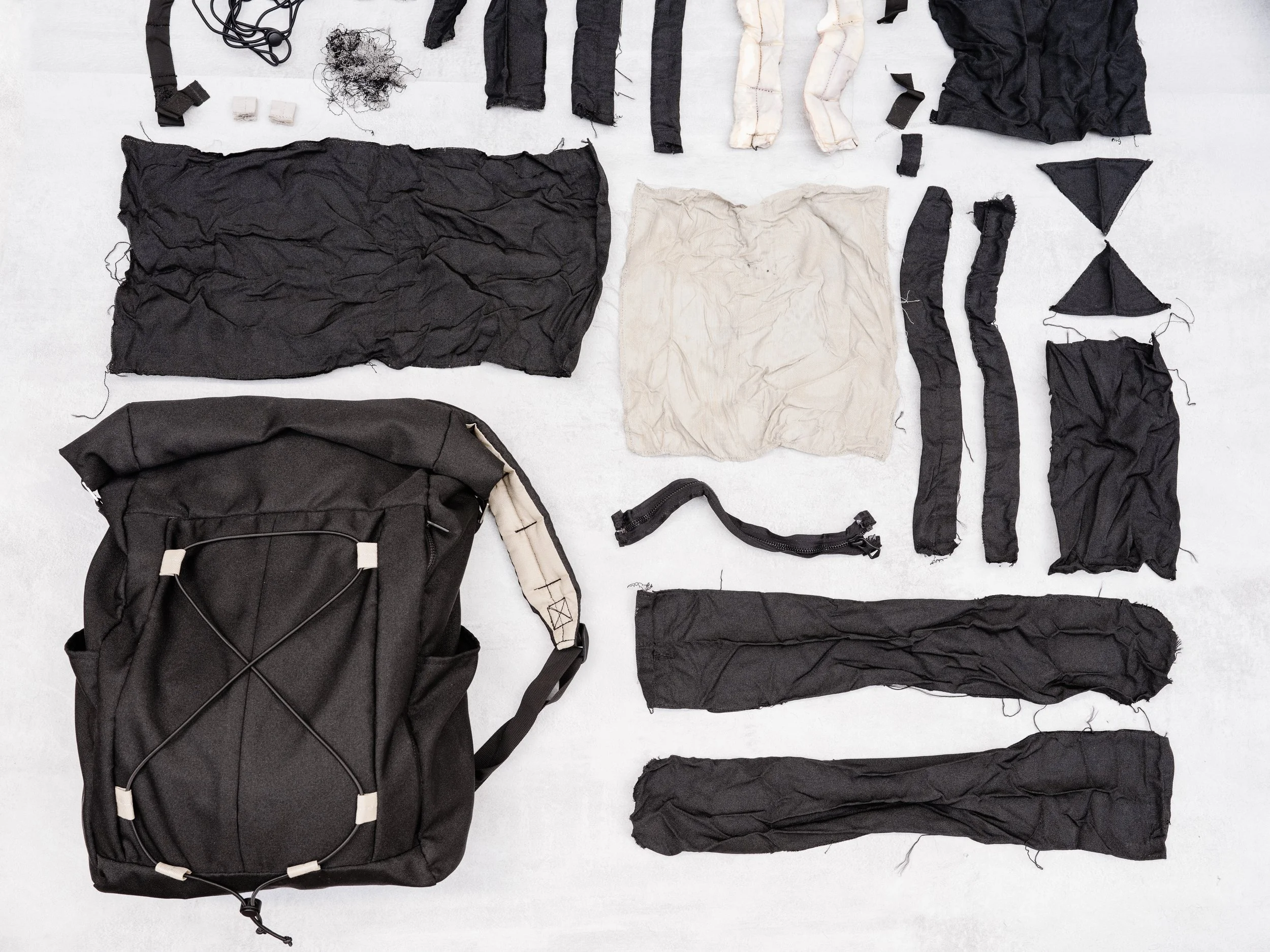
From the processed product back to its origins: the backpack was broken down into its individual parts in a separation process so that these could be returned to their respective recycling cycles.
Why is DfD so relevant to the textile industry?
Today, more than 75 per cent of all textiles consist of complex material mixtures or are processed or finished in such a way that economic separation is simply not possible. The result is that all these textiles end up in landfills or incinerators after use, even if the individual materials were theoretically recyclable. This is because the lack of recyclability is often not caused by the materials themselves, but by the way they are combined. A genuine transformation to a circular economy therefore requires a radical rethink in three specific areas.
Material purity & transparency: Materials must be selected in such a way that they are technically recyclable. Digital product passports will support this process in the future.
Joining technologies: The biggest obstacle to recycling today is seams, adhesives, coatings, and finishes. Removable joints are therefore a crucial lever.
Modularity and repair-friendly design: Products should be designed so that individual components can be replaced, repaired, or upgraded—instead of throwing away the entire product.
Essential cornerstone for the circular economy
As a strategic lever for genuine sustainability, DfD ensures that materials are preserved at the end of their life cycle instead of losing value. In addition, the demand for new raw materials decreases and the carbon footprint is significantly reduced over the entire life cycle of a product. Repairability extends the service life, and the possibility of single-type recycling minimizes disposal and recycling costs. This creates an ecological advantage that also unlocks economic potential—for manufacturers, brands, and consumers alike.
Design for disassembly is not a trend, but an indispensable cornerstone for a circular textile industry. Only products that can be taken apart again can become part of a genuine material cycle. Because sustainability does not begin with recycling—it begins with design. It is time to develop textiles that are not only durable and functional, but also designed in such a way that they can be reused in new cycles at the end of their life.
Design for Disassembly by CLIMATEX: Proof-of-Concept in Real-World Application
At CLIMATEX, DfD is not a theoretical approach or an option, but a strategy that we put into practice. We develop technologies and products that can ultimately be broken down into their individual components at the end of their life cycle and returned to their respective cycles—without compromising on functionality, comfort, or aesthetics.
To demonstrate the applicability of our systemic approach to the textile circular economy, prototypes such as a backpack and a jacket were manufactured using our technologies. These were then broken down into their original components in a separation process in order to sort all materials by type and prepare them for recycling – proof of consistent circular design.
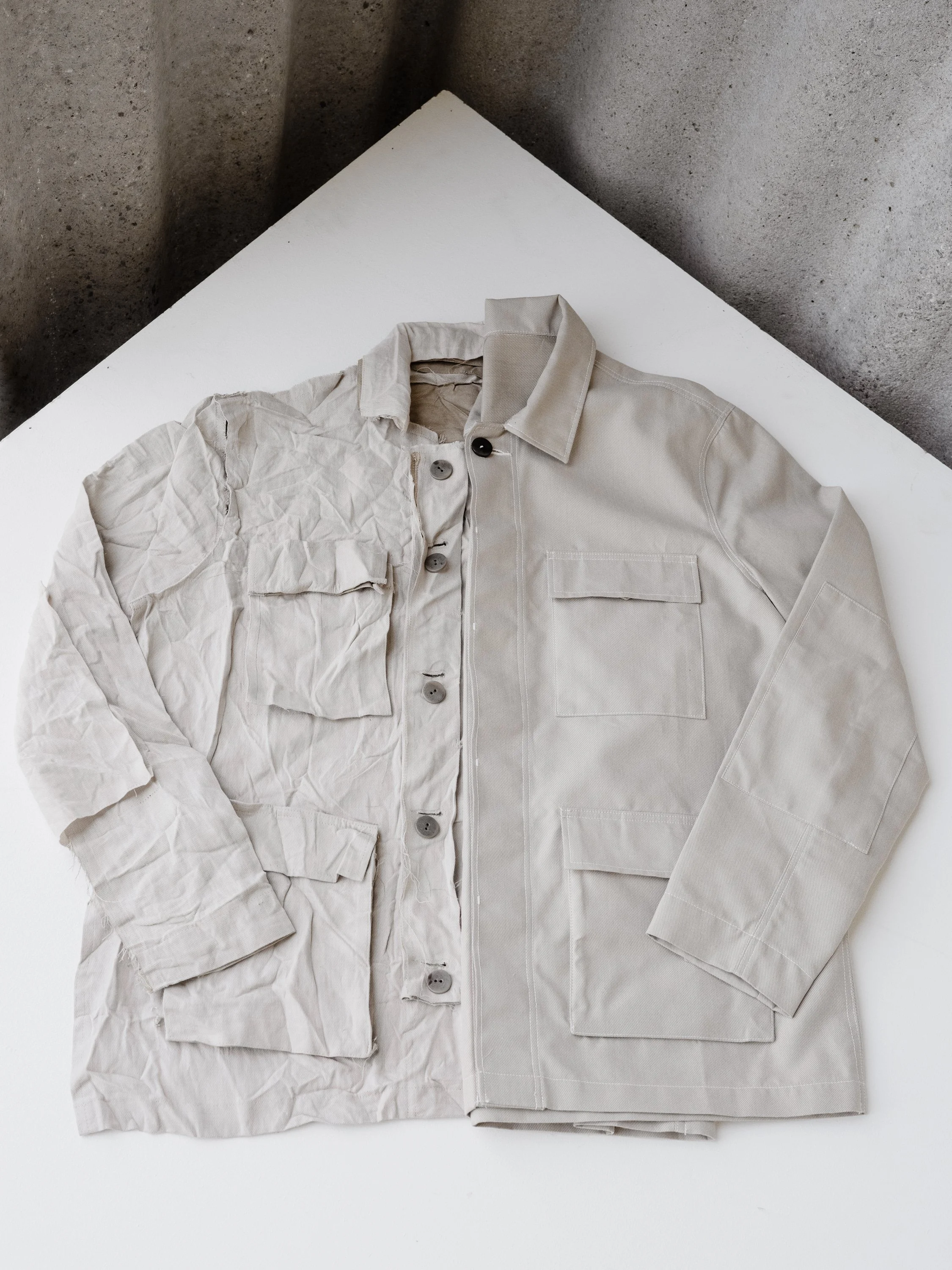
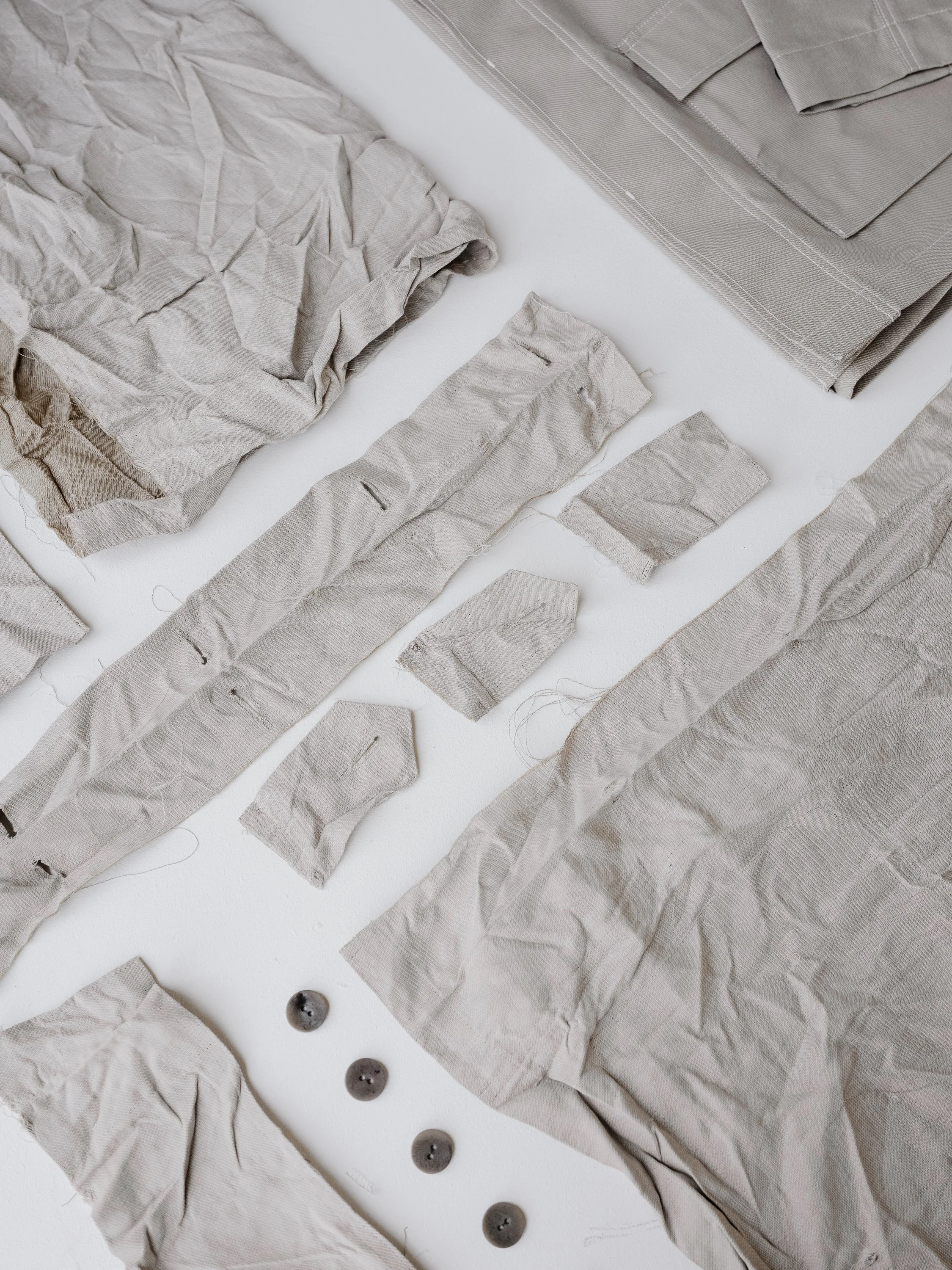
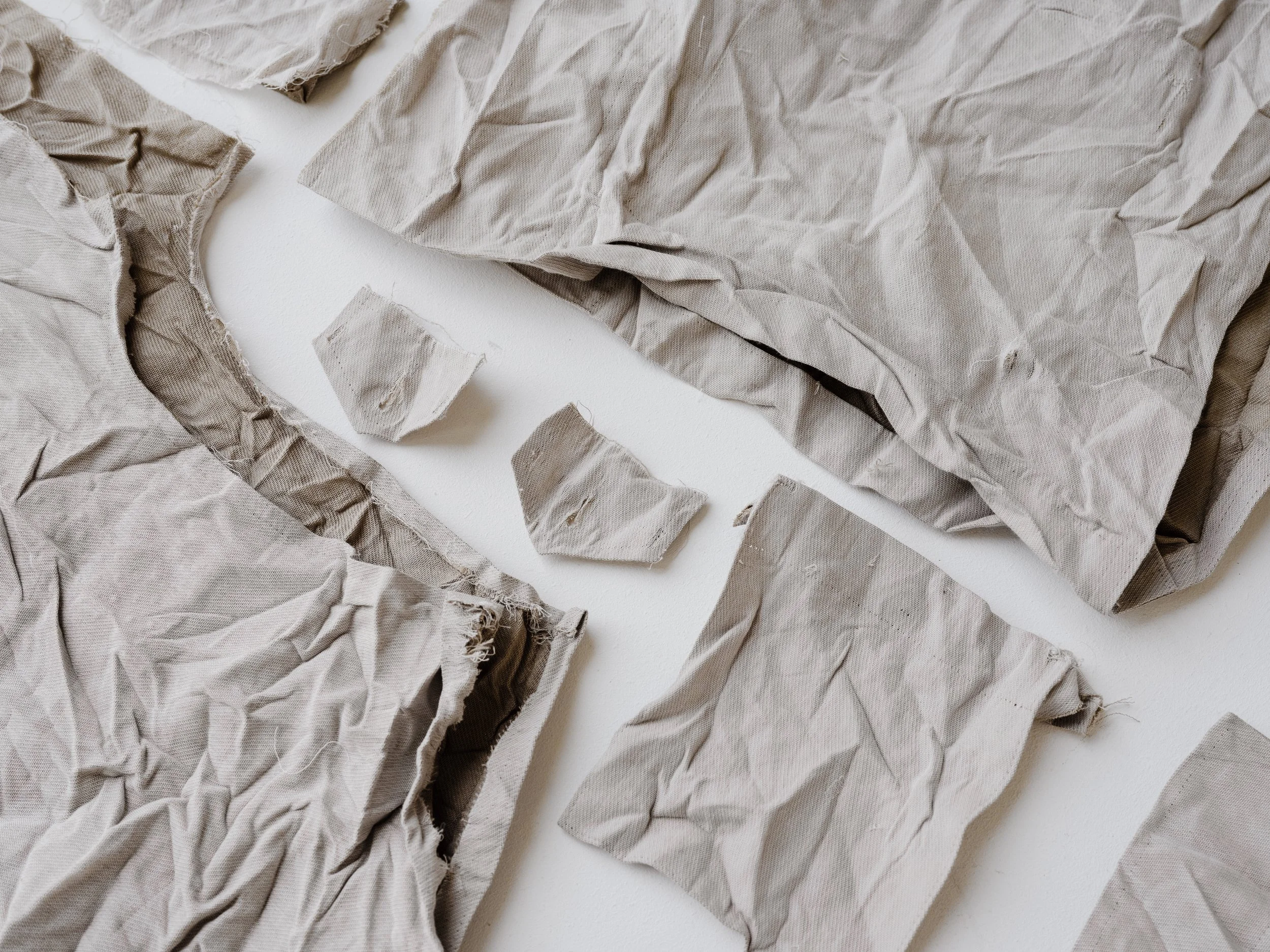
The jacket made of DUALCYCLE fabric and sewn with STITCHLOCK was broken down into its original components in a disassembly process to make them ready for recycling.