
"If I don't have an impact, there’s no reason for me to be part of this industry."
Not only is Yannik Zamboni's fashion vegan, gender-neutral and political, it is also socially fair, plastic-free and circular to the core. The Swiss fashion designer, who gained international recognition through his appearance on the fashion reality show "Making the Cut", explains why he wants to transform the textile industry from within. A conversation about consistent principles, financial crises, Heidi Klum and circular socks.
CLIMATEX: You are the driving force behind Maison Blanche, one of Switzerland's most uncompromising labels with international appeal. How did it all begin?
Yannik Zamboni: In 2020, the day before lockdown began, I had just received my diploma in fashion design. But then everything suddenly shut down. I had spent all my money on my studies, I couldn't go abroad to work, and I was living with my mother again. I hadn't studied for four and a half years just for that to happen.
How did you manage to fight your way out of it?
In exchange for cleaning the house, I rented a vacant clergy residence. At the same time, I applied for a start-up grant for my business. Two thousand francs a month had to be enough. I also sold custom-made items and rented a studio at the Swiss Textile School to use as a workspace for my label, Maison Blanche. It was tough, but I was creative.
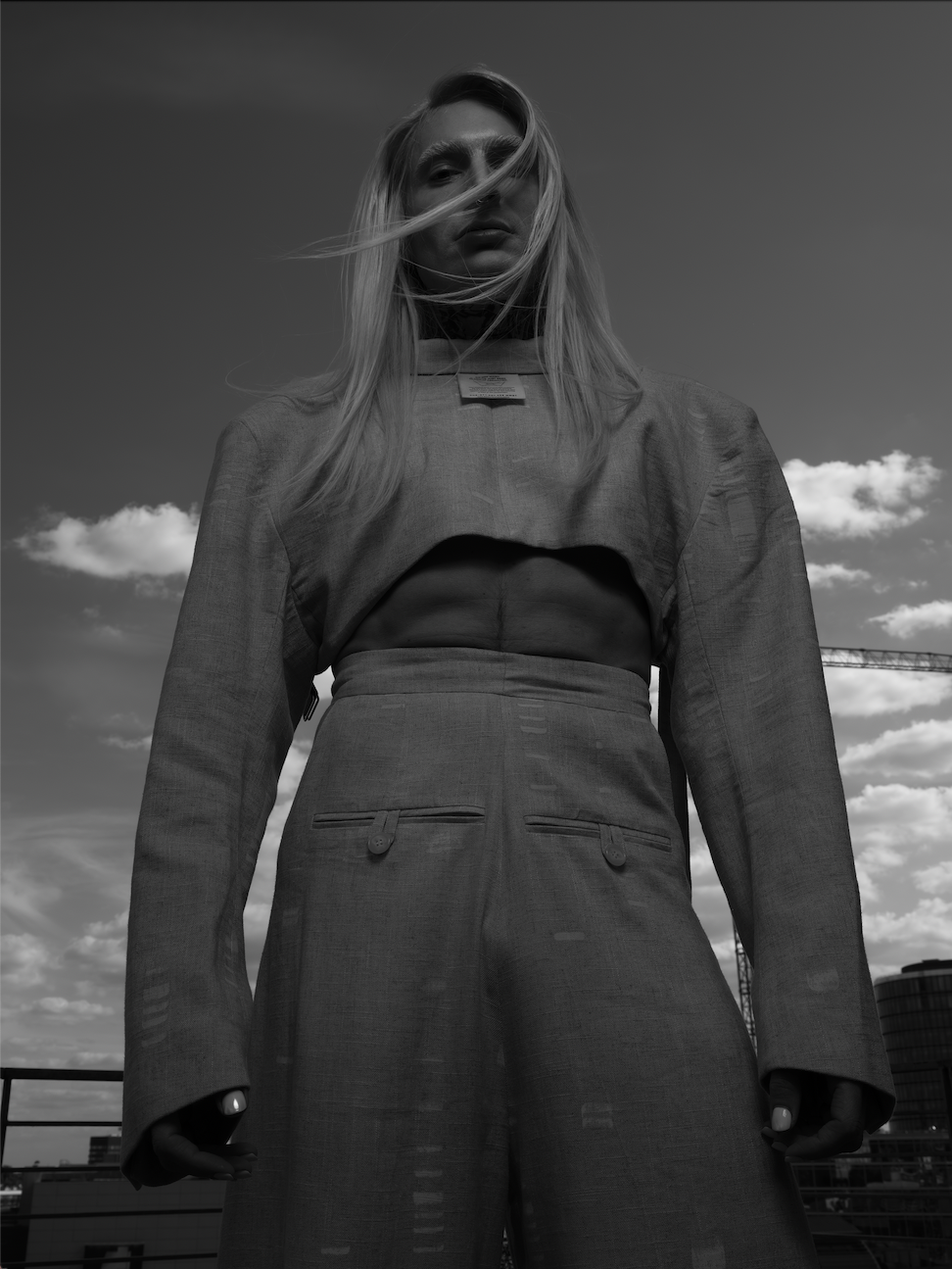
"Many brands talk about sustainability, but I take a closer look: GOTS-certified, but with a polyester label and plastic cover? That's not good enough."
Yannik Zamboni, Creative Director & Founder Maison Blanche
Foto: Josua Akcan Hermes
Then you took part in "Making the Cut" – and you won.
The show was a lucky chance. Desperate for a way to live for free for two months, I decided to take part — and then I walked out with a million dollars in seed funding and a deal with Amazon. It was pretty amazing: suddenly, I was at New York Fashion Week, and my label, Maison Blanche, was being represented worldwide. However, after a year and a half, Amazon changed the terms and stopped guaranteeing to buy my collections. This meant that I would have had to hire staff without knowing whether we would sell anything at all. That wasn't possible.
So you ended the contract?
Yes, it was the right decision, but I suddenly found myself without a sales channel. We had to turn to crowdfunding to secure production. 600,000 francs might seem like a lot at first, but in the fashion industry it's a drop in the ocean. A single piece of fabric that meets our standards can quickly cost tens of thousands of francs...
You have high standards: vegan products, no plastic, fair working conditions, taking a political stance against discrimination and a cradle-to-cradle approach. Why are you setting the bar so high?
Because nobody else does it. I didn't study fashion just to design pretty dresses. There are already plenty of those. If I can't make an impact, this industry doesn't need me. I want to drive real change from the inside out.
In a world where fashion is all about consumption, is that realistic?
Of course it's difficult. However, I'm sticking to my principles because I'm convinced that the way we produce and consume fashion must change. Even companies like H&M and Amazon now offer circular products, although this is mainly for marketing purposes. Nevertheless, if they manufacture even just a few products correctly as a result, this will have a significant impact given their scale of production. In order to reach a large audience, I need strong partners — but only if they're willing to play by my rules.
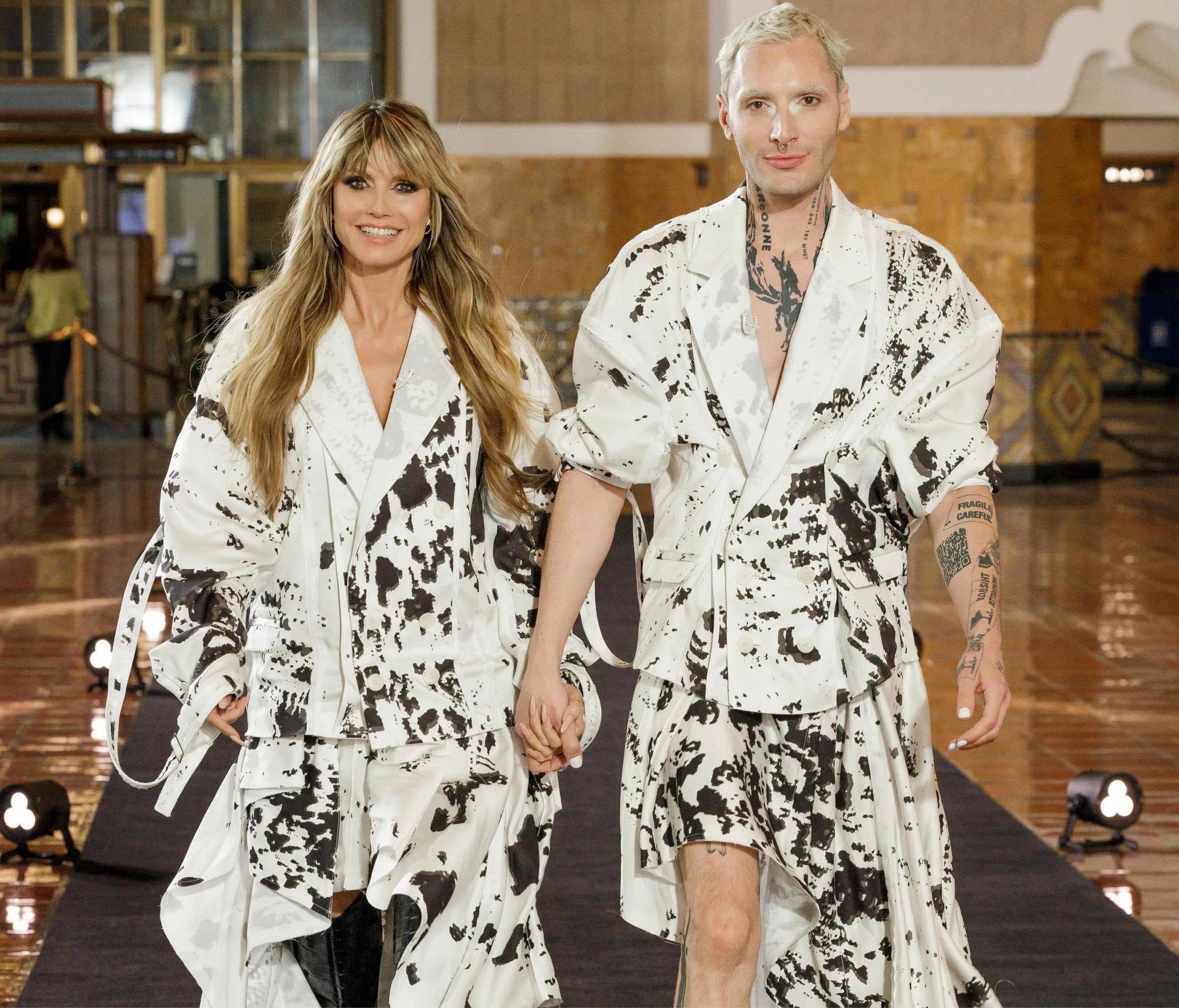
Yannik Zamboni received significant backing from Heidi Klum for his vision for Maison Blanche on "The Cut". The two remain friends to this day.
Is your fashion and the price attached to it understood, and if not, what needs to be done to rectify the situation?
Maison Blanche is clearly positioned in the upper price segment, yet people only consider production costs when it comes to fashion. The idea of paying 710 francs for a pair of leggings sounds crazy, but developing and researching our fabrics and collections is very costly. Then there are showroom rents, team costs, marketing expenses, and so on. These leggings contain a fabric that we developed ourselves, as well as a biodegradable elastic band. We also ensure that our workers are paid fairly and that our production processes are sustainable. In the future, I also intend to develop a second, more commercial line. There is demand for it, but that also costs money and requires reach. We are working on collections and collaborations, and trying to win over the big players to our cause — but always on our terms.
How challenging is it to uphold all your principles during day-to-day production?
It is extremely difficult. It took us two years just to develop a vegan perfume. The fragrances had to be vegan, and the fact that the packaging contained bone glue was a real deal-breaker for me. So the manufacturers had to rethink and carry out new tests, which delayed everything. But I am consistent; otherwise, I might as well give up.
Who are your customers?
Initially, it was mainly people from Switzerland and Germany, but increasingly, it was also people from France, England and Scandinavia. This has changed due to our cooperation with Amazon; previously, there were more customers from the USA and Brazil. Now, however, we are building a community in Europe. It's not just about fashion; it's about people who share our values. That's why we've launched a community membership programme, open to everyone, regardless of whether they shop with us.


Famous musicians like Ciara, Kesha and Teddy Swims like to show themselves off in Maison Blanche creations.
You have a lot of contacts in the celebrity world. What is it like being friends with Heidi Klum?
Of all the people I met at the show, Heidi was the only one who kept in touch. She invited me to events and sits on the advisory board of Maison Blanche. Who knows? Maybe she can use her contacts to help with the next round of financing. But I'm not expecting that; we're friends first and foremost.
You are also involved with the Swiss interest group, Circular Clothing. What appeals to you about it?
The free exchange. In the fashion industry, people tend to isolate themselves. Here, we share knowledge and help each other with contacts, developments and more. I believe in open source — if you really want to effect change, you have to be willing to share. I would like to see more honesty in the industry. Many brands talk about sustainability, but when I take a closer look: GOTS-certified products with polyester labels and plastic sleeves? That's not good enough. Cradle-to-cradle is expensive, yes, but necessary. It is possible; it just needs more commitment.
What's your next project?
A circular sports sock! It sounds simple, but it's technically very complex. However, I want to demonstrate that even a seemingly simple product like a sock can be revolutionised without compromise.