
“CLIMATEX is uniquely positioned because its technologies integrate directly into existing supply chains and production processes.”
To support the international scale-up of CLIMATEX, Camilla Skjønning Jørgensen has been appointed CEO-designate.The textile expert brings more than 20 years of experience in the fashion and textile industry – spanning core business operations, sustainability, innovation investment and business development. Having worked across the full value chain, she is recognised for connecting advanced material solutions with commercial and industrial realities. In her new role Camilla will focus on positioning CLIMATEX and its technologies in global target markets, including workwear, fashion and interior design, while driving internatioal growth with industrial partners. In this first interview, the textile expert talks about her plans and what fascinates her about CLIMATEX.
What excites you most about CLIMATEX?
CLIMATEX addresses one of the most overlooked structural barriers in textile recycling: the way products are constructed today often prevents them from being efficiently recycled tomorrow. It enables intentional construction and controlled disassembly through a very small but critical component – the sewing thread. Even as a small part of the product, it determines whether garments and trims can be taken apart again. By introducing a controlled unlock mechanism at this point, CLIMATEX enables significantly higher material recovery yields. One small change at the construction level unlocks a much larger volume of recoverable material.
For decades, innovation has focused on next-generation materials, while relatively little attention has been paid to how products are constructed. CLIMATEX introduces engineering at the construction level, ensuring durability during use and enabling separation at end of life. It creates the conditions for circularity to function in practice. What excites me most is bringing this technically validated platform into industrial implementation, working with partners across the value chain to make circular construction commercially viable at scale.
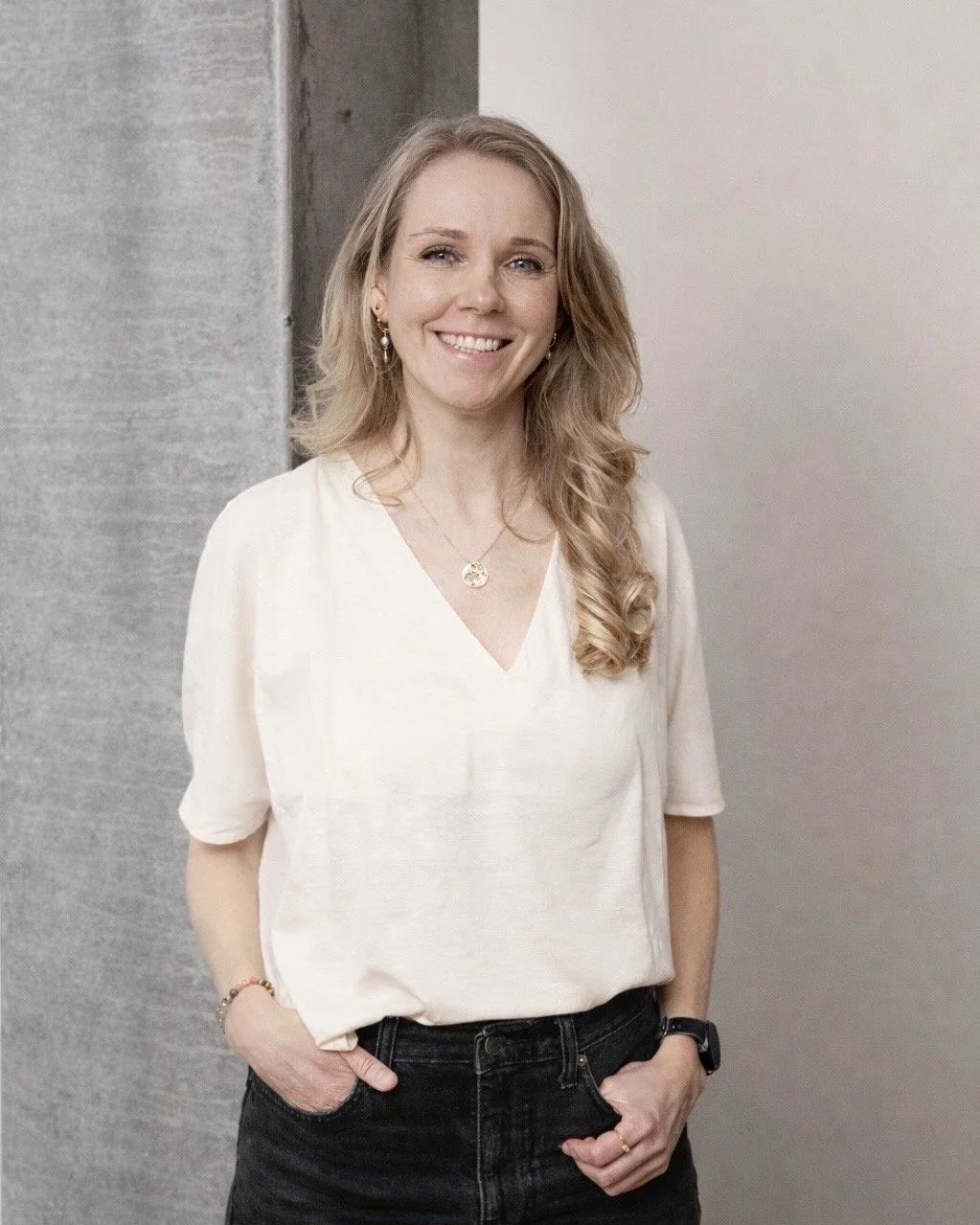
"CLIMATEX is uniquely positioned because its technologies integrate directly into existing supply chains and production processes."
Camilla Skjønning Jørgensen
CEO-designate CLIMATEX
How do you see CLIMATEX's role within the broader textile ecosystem?
It's not a space defined by competitors, but by complementary efforts towards circularity. We are addressing structural challenges that require an ecosystem of solutions, and CLIMATEX plays a very specific and critical role within that ecosystem. Most innovation focuses on developing alternative materials or improving recycling technologies. CLIMATEX addresses a different and equally critical layer: how products are constructed.
The technologieenable products to be intentionally assembled in a way that allows them to be intentionally disassembled. This fundamentally changes what becomes recyclable in practice. The platform is built around proprietary construction technologies such as STITCHLOCK™, WEAVELOCK™, and KNITLOCK™, which integrate controlled unlock functionality directly into textile construction while maintaining full performance during use.
What does the market need today?
The market needs circular solutions that work within existing industrial systems and solve real operational constraints. CLIMATEX is uniquely positioned because its technology integrates directly into current supply chains and manufacturing processes. It is disruptive in impact, but not in implementation. It uses known materials, fits into existing infrastructure, and does not require major capital investment. This makes it scalable and allows the industry to transition toward circularity without rebuilding itself.
A key barrier today is the inability to efficiently disassemble products at end of life, which limits recycling yield, material quality, and economic viability. CLIMATEX addresses this at the construction level by enabling controlled disassembly, significantly increasing recoverable material. The industry is moving from ambition to execution – CLIMATEX enables that shift.
Where do you see CLIMATEX in three to five years?
In three to five years, I see CLIMATEX as an established basic technology that is integrated into global textile supply chains. In the short term, the focus is on the industrialization of STITCHLOCK™—through so-called lighthouse partnerships that demonstrate reliability, performance, and economic viability under real production conditions.
Building on this, the platform will be expanded to include woven and knitted construction technologies and will be used in clothing, workwear, and interior textiles. In the long term, CLIMATEX has the potential to establish itself as a license-based enabler that facilitates circular textile construction across the industry. Our goal is to create a new standard for how textiles are constructed.
What motivates you personally in this role?
I have been working at the interface between brands, suppliers, innovators, and investors for many years. Time and again, it becomes clear that the biggest obstacle to progress is not a lack of ideas, but the difficulty of implementing them. Talking about change is easy. Actually implementing it is challenging.
I am motivated by the opportunity to bring together technology, business models, supply chains, and ecosystems in such a way that concepts become industrial reality. CLIMATEX has the technical foundation and patents to solve a structural limitation in the system. My job is to make this solution implementable in real supply chains – with the right partners, the right business model, and viable industrial integration.
I am also driven by the development of solutions that have a lasting structural impact. Not narratives, but infrastructure. Because changing the way products are designed also changes what is possible at the end of their life cycle. And that is where true circularity begins.