
«A systematic solution must be developed at industry level.»
Nina Bachmann has been responsible for sustainability, environment and energy at the industry association Swiss Textiles for a decade. In this interview, she talks about the key themes of the "Sustainable Textiles Switzerland 2030" programme, the need for an EPR solution in Switzerland and how her role has changed over the years.
CLIMATEX: You support the members of Swiss Textiles in their sustainability efforts. In what areas is your expertise in demand?
Nina Bachmann: Our consulting services cover a wide range of topics: from implementing sustainability standards or developing specific strategies to webinars on various standards or recycling tools. In the past, the focus was very much on local production sites, but as we have become more international, our sustainability strategies have to take into account the entire global supply chain.
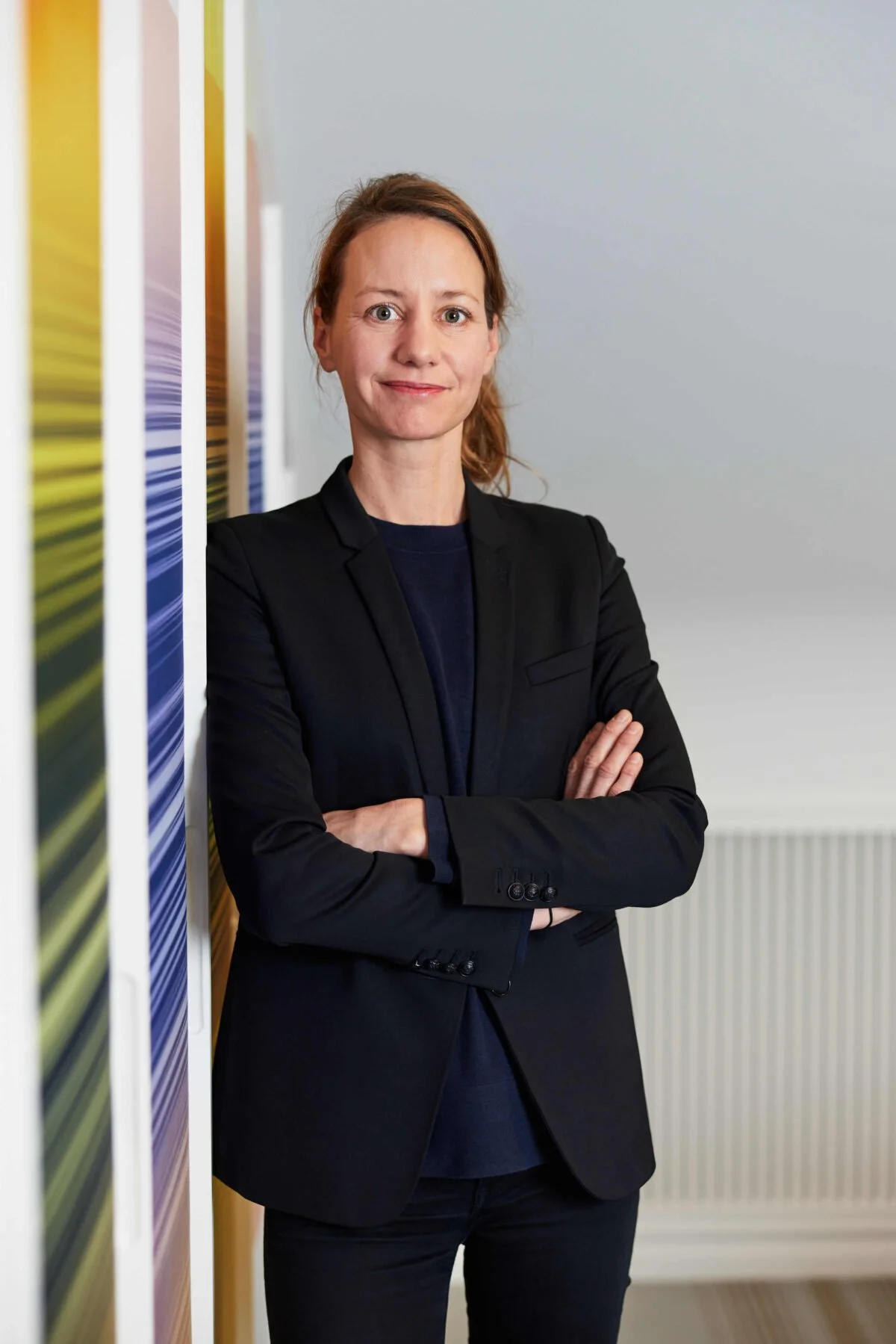
«A private sector
EPR solution at industry level is the way to go forward as it is tailored to business needs.»
Nina Bachmann, Head of Sustainability and Technology at Swiss Textiles
What issues are you and the industry dealing with in this context?
The key topics are transparency along the supply chain, the circular economy, human rights in production and reducing CO2 emissions. These four areas also form the basis of our consultancy and event offering as part of the "Sustainable Textiles Switzerland 2030" programme, for which we are a supporting organisation. In addition, recycling technologies and digital tools for take-back systems play a central role in the technology area, and we are involved in various research projects in the field of the circular economy.
Where is there the greatest need for action?
The greatest challenge clearly lies in the area of the circular economy. There are still few established business models in this area, which leads to numerous inquiries on this topic. In addition - with the Green Deal as a basis - the EU Textile Strategy, which specifically calls for circularity in the textile industry, is imminent. The 16 new regulations of the EU Textile Strategy are explicitly aimed at manufacturers of clothing and home textiles. However, technical textiles are also affected due to the necessary adjustments to chemicals. This represents a significant change for the EU market, which is so important to us.
“The biggest challenge is clearly the circular economy. There are still few established business models in this area, which leads to many enquiries on this topic.”
What will be the strengths of the Swiss market in the future?
We see many exciting developments from Swiss players in the field of biodegradable or PFAS-free materials. In addition, Swiss start-ups are leading the way in digital solutions that make circularity efficient. For example, they offer automated take-back systems for online stores, resale platforms and supply chain tools to cover the entire lifecycle management. Progress is also being made in recycling technologies, particularly in chemical recycling, where Swiss companies are well positioned in research.
Sounds like a lot can be done by 2030?
Absolutely! There are already working solutions, some of which are already on the market, albeit on a small scale. What matters now is how these innovations are received. The market is huge and diversified, and for some sectors, such as fast fashion, such technologies make no sense, despite their great innovative power. For others, however, it makes a lot of sense if valuable ingredients can be reused. Understanding and raising awareness among manufacturers is also key.
What are you hearing from the industry in terms of recycling systems?
The issue is very challenging. There are various start-ups that facilitate take-back, but I believe a systematic solution needs to be developed at industry level. We are currently working on a project for extended producer responsibility (EPR), in which take-back is organized centrally and the material is returned for recycling. This is similar to the process for electronic items or PET bottles. This would help companies to avoid having to organize take-back themselves. A broader take-back system would offer more quantity, better recycling quality and more investment security for recycling technologies.
To move in this direction, what action is needed?
On the one hand, companies need to set internal goals and start with design, because you need to ask yourself from the outset what material you want to produce and bring to market. This requires consistent rethinking. On the other hand, companies must enter into partnerships for take-back and after-sales responsibility and win over associations to organise the system. Good joint solutions are needed because take-back and recycling are not - and do not have to be - core competencies of textile companies. They should focus on innovating new materials.
When could such a recycling solution come into effect?
Hopefully soon. We are currently working with a group of distributors on an EPR solution so that companies have the opportunity to proactively help shape the future. If we wait for politicians to set guidelines, companies will only have a limited say. Otherwise, it could end up like in France, where the state dictates which organization implements the EPR rules and companies have hardly any say.
“We are currently working with a group of distributors on an EPR solution so that companies can be proactive in shaping the future. If we wait for politicians to set the rules, companies will have a limited say.”
Do you think Switzerland could introduce such measures?
Personally, I think it's better if the industry itself gets behind it and actively helps to shape the solutions. A private-sector EPR solution at industry level is the right way forward, as it is tailored to business needs. It's good if politicians build up a certain amount of pressure, but the initiative should come from the industry itself. The will of the companies is there and I am convinced that we can achieve this.
In Germany and the Netherlands, there are already EPR systems that have recently submitted applications to the government because large online fast fashion platforms, particularly from China, have not registered for them. The government and customs will now have to take action and intervene, as EPRs are mandatory in these countries and are recognized by the government. If we had an EPR solution in Switzerland, these large platforms would also have to co-finance our recycling systems in this country.
What will keep you busy in the coming years?
The priority project "EPR industry solution" is certainly a topic that will require a lot of resources. In the area of technology, we also want to strengthen networks and bring relevant tech players together with our member companies. Because one thing is clear: it won't work without technology.
swisstextiles.ch